Wat is er Nieuw?
Zeewaterforum.info

U bezoekt ons forum als gast, wij zouden het leuk vinden als u zich registreert en aktief mee discussieert in de verschillende topics.

Het Dymico hobby systeem

Dat zijn o.a. de sponsen.
Door het systeem de tijd te geven zal er een populatie ontstaan die een krringloop in het systeem in stand gaat houden.
Ga je te snel dan schiet het alle kanten op met als gevolg sterfte.

Sponsen kunnen bacterien verwerken, heb je echter teveel bacterien, dan slibben de sponsen dicht en sterven af . Zo ben je terug bij af...

De sleutel is dus alle processen de tijd geven en geleidelijk opvoeren.

Happy Reefing, GlennF.

Bedankt voor je antwoord. Klinkt als een lastige zaak om dit evenwicht goed voor elkaar te krijgen.


Verzonden vanaf mijn iPhone met Tapatalk
 
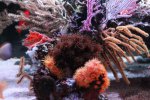
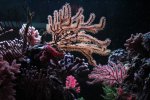
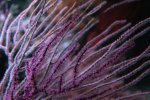
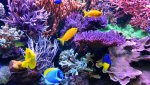
Geleidelijk aan heeft Glenn een feestelijke boel van zijn DyMiCo-systeem gemaakt. Door veel en regelmatig te voeren, elke dag weer, hebben Margriet en Glenn een aquarium vol moeilijke houdbare dieren in goede gezondheid weten te houden. Gorgonen, Dendronephthya's, Tubastraea spp, sponzen en haarsterren.

Bij dezen enkele foto's, door Glenn zelf gemaakt.
 

Bijlagen

  • IMG_1432.jpg
    IMG_1432.jpg
    72,4 KB · Weergaven: 84
  • IMG_1437.jpg
    IMG_1437.jpg
    64,8 KB · Weergaven: 83
  • IMG_1465.jpg
    IMG_1465.jpg
    52,7 KB · Weergaven: 79
Dymico2sps is los....
5bdc28bf8584b551959e4a6b165dd92b.jpg

fc683f214fee3200503429c29cf0b34e.jpg


Happy Reefing, GlennF.
 
Hello, (sorry mijn nederlands is niet zeer goed maar ik begrijp)

I discover the Dymico system and I'm completely ok with the fact that we use too much electricity in the hobby! It's also one of the reason why I stopped my tank some years ago. It seems to be a revolution in reefkeeping. Do you thing we could obtain so beautifull colors just with this system and some supplements for big SPS tanks? I know your tank Glenn but do you think that Dymico could obtain colors like the DSR, Aquaforest, Fauna Marin, KZ... SPS system with less energy, reactors, supplements and time?

Could we imagine a tank like the Zebra99 tank with the Dymico system?
Urbanreefcorals 01.jpg

I see you will test it on a SPS tank but I've seen that on your first DYmico tank, SPS were colorfull as well...(congratulation, it's a marvelous NPS tank)!

On an other way, do you think that this system could be easily used for great Reefshops systems where electric consomption is very high?


I think also that this system must be adapted for nano tanks where there is not a lot of place for a skimmer, reactors... this is the best way to make it easier for beginners, with no water changes...

One question more, PH probes becomes deficient with time in sea water. Is it a danger in this system? How do you change or calibrate the probe if it's inside the sand bodem of the filter?

JF

 
Hello, (sorry mijn nederlands is niet zeer goed maar ik begrijp)

I discover the Dymico system and I'm completely ok with the fact that we use too much electricity in the hobby! It's also one of the reason why I stopped my tank some years ago. It seems to be a revolution in reefkeeping. Do you thing we could obtain so beautifull colors just with this system and some supplements for big SPS tanks? I know your tank Glenn but do you think that Dymico could obtain colors like the DSR, Aquaforest, Fauna Marin, KZ... SPS system with less energy, reactors, supplements and time?

Could we imagine a tank like the Zebra99 tank with the Dymico system?
Bekijk bijlage 456054

I see you will test it on a SPS tank but I've seen that on your first DYmico tank, SPS were colorfull as well...(congratulation, it's a marvelous NPS tank)!

On an other way, do you think that this system could be easily used for great Reefshops systems where electric consomption is very high?


I think also that this system must be adapted for nano tanks where there is not a lot of place for a skimmer, reactors... this is the best way to make it easier for beginners, with no water changes...

One question more, PH probes becomes deficient with time in sea water. Is it a danger in this system? How do you change or calibrate the probe if it's inside the sand bodem of the filter?

JF

Dear JF,

I'm sure Glenn will respond but here is my feedback to start you off with.

1) You should indeed be able to achieve bright coral colouration with DyMiCo. As you probably know, coral colours depend on mostly two factors; light and water quality. If you have powerful lights, and do not feed the aquarium heavily (to maintain low N/P levels), you should be able to maintain colourful corals.

2) DyMiCo is very useful for aquarium retailers, as they no longer will have to change water in their coral and fish systems. We have already tested MODEL 2000 at a wholesaler (Jarathana International), with hundreds of fishes as bioload at any given time. Nitrate levels were stable between 5 and 10 ppm (mg/L), without water changes, which impressed us.

3) It is highly difficult to make DyMiCo even smaller than it is now (with a minimum aquarium volume of 300 liters), as the smaller a nitrate reactor becomes, the more unstable it will be. I will not say it's impossible but quite difficult. Moreover, such a system would be prohibitively expensive for such a small aquarium, unless we develop a cheaper alternative to IKS.

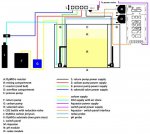
4) Calibrating the pH probe is easy, as it is placed in a separate compartment (B) which constantly communicates with the reactor (C). See the attached image for details. Of course, in time, both probes will require replacement (after about three years, depending on butter fingers ;)).

With best wishes,

Tim
 

Bijlagen

  • DyMiCo overview V2.jpg
    DyMiCo overview V2.jpg
    49,3 KB · Weergaven: 121
Laatst bewerkt:
Thanks very much for your answer. I'm very exited by this new way of filtration and it will be, I'm sure, a great success.
I'm in relation with french people from Belgium and France on forums. Do you have any documentation in French?

Just an other question, when you place a system in a shop for fish only, is this method compatible with UV lamps because we work with bacteries... How a wholesaler could use a UV in case of disease in his tank? Because we kill only bacteries in the water?

Thanks for your answer...

Hi DF,

You're welcome of course. Je suis vraiment désolé... we do not yet have French documentation. UV is not a problem, as we actually tested the wholesale DyMiCo system with a powerful UV filter. It will reduce bacteria and phytoplankton concentrations, but this is not essential in a fish system. DyMiCo will never produce sufficient plankton for a tank full of fishes (unnatural balance between water volume and biomass), so they need to be fed with commercial feeds anyway.
 
Vandaag is Philips bij ons opnames aan het maken voor de instructie video voor hun nieuwe Coral Care Led lampen.
Prototypes van deze lampen hangen boven ons grote systeem waar we de grote versie van DyMiCo (2000) op testen.
c984fd44289abfd4e329b62ae821868e.jpg
1678a24a6661f76dc78c9c19b8bd5d46.jpg
 
3 lampjes om 2000 liter uit te lichten :cool: topjes

Groet,

Frank
 
Het is eigenlijk 1400 liter Frank (70 cm waterhoogte), maar het is toch 2 m2 aan oppervlak, dus heel netjes inderdaad!

Ow... :o. Maar dan nog!!!

Groet,

Frank
 
Hi DF,

You're welcome of course. Je suis vraiment désolé... we do not yet have French documentation. UV is not a problem, as we actually tested the wholesale DyMiCo system with a powerful UV filter. It will reduce bacteria and phytoplankton concentrations, but this is not essential in a fish system. DyMiCo will never produce sufficient plankton for a tank full of fishes (unnatural balance between water volume and biomass), so they need to be fed with commercial feeds anyway.

Will DyMiCo be able to produce a sufficient amount of plankton to feed NPS?


Verzonden vanaf mijn iPhone met Tapatalk
 
Will DyMiCo be able to produce a sufficient amount of plankton to feed NPS?


Verzonden vanaf mijn iPhone met Tapatalk

Hi Mjie,

No, it never will, although it does produce lots of bacteria which will help you maintain healthy azooxanthellate corals, sponges, etc.. No filter will ever be able to produce sufficient phytoplankton or zooplankton for an aquarium full of corals and fishes. This is because aquaria are extremely unnatural, in terms of the ratio between biomass (fishes, corals, etc.) and seawater. If you turn a swimming pool into a marine aquarium, with a dymico filter on it, and put two fishes and one coral in there, yes it would be possible. But not in an aquarium which holds almost more animals than seawater ;). The grazing pressure, so the amount of hungry mouths to feed, is simply too high.

In short, you will have to feed your corals every day. I strongly recommend dosing rotifers and microalgae using a dosing computer several times per day and night. This is great for your sponges, tunicates, bryozoans, crinoids, gorgonians, black corals (antipatharia), soft and hard corals. The advantage of DyMiCo is that food will remain available to your animals for a long time, especially if you dose after the filter has stopped pumping water to the aquarium every hour.
 
Laatst bewerkt:
Hoe gaat het doseren van microalgen en rotiferen in z'n werk? Een kweekje opzetten en levend toevoegen? Of kan dit ook met diepvries/gedroogd?
 
Back
Bovenaan