
Zeewaterforum.info
U bezoekt ons forum als gast, wij zouden het leuk vinden als u zich registreert en aktief mee discussieert in de verschillende topics.
Je gebruikt een verouderde webbrowser. Het kan mogelijk deze of andere websites niet correct weergeven.
Het is raadzaam om je webbrowser te upgraden of een alternatieve webbrowser te gebruiken.
Het is raadzaam om je webbrowser te upgraden of een alternatieve webbrowser te gebruiken.
Het Dymico hobby systeem
- Topicstarter GlennF
- Startdatum
OP
OP

GlennF
Senior Forumlid
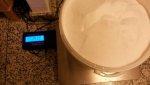
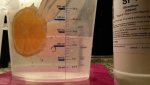
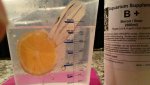
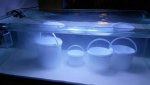
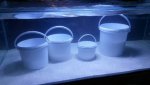
NaCl emmer leeg
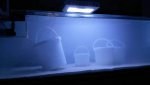
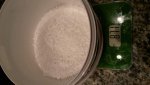
In de MgCl2 emmer en gaan....
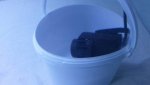
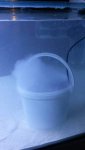
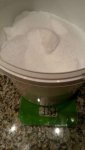
CaCl2 emmer

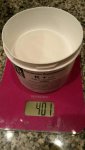
De hulpemmers na gebruik
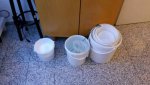
Hier staat ook de verwijderde 10 liter bij...
Ik heb ook 2 kilo (van de 14,3Kg) NaCl apart gezet, om na controle met de refractometer bij te kunnen sturen. Met de gedachte "erbij is makkelijk , verwijderen is lastiger".
Uiteindelijk is alle 14,3Kg erin gegaan.
greetings, GlennF
In de MgCl2 emmer en gaan....
CaCl2 emmer
De hulpemmers na gebruik
Hier staat ook de verwijderde 10 liter bij...
Ik heb ook 2 kilo (van de 14,3Kg) NaCl apart gezet, om na controle met de refractometer bij te kunnen sturen. Met de gedachte "erbij is makkelijk , verwijderen is lastiger".
Uiteindelijk is alle 14,3Kg erin gegaan.
greetings, GlennF
OP
OP
GlennF
Senior Forumlid
Een filmpje hoe het mengen van maatwerk zout toegaat.
Kijk 'Setting up a new Dymico system with custom saltmix' op YouTube
Setting up a new Dymico system with custom saltmix: https://youtu.be/us8uEFQe62A
greetings, GlennF
Kijk 'Setting up a new Dymico system with custom saltmix' op YouTube
Setting up a new Dymico system with custom saltmix: https://youtu.be/us8uEFQe62A
greetings, GlennF
adevries78
ZeewaterForum lid
Ziet er goed uit!! Heb je er al een bodem in liggen? Of zijn dat de onopgeloste zouten?

OP
OP
GlennF
Senior Forumlid

OP
OP
GlennF
Senior Forumlid
Is een aardig groot project Glenn. Succes.
Alles vanaf de de grond opgebouwd (behalve de dymico filter natuurlijk)
greetings, GlennF
OP
OP
GlennF
Senior Forumlid
Ziet er goed uit!! Heb je er al een bodem in liggen? Of zijn dat de onopgeloste zouten?
Ja het zand (0,5-1mm) zit er al in. Daarom heb ik emmers gebruikt om de zouten op te lossen, anders had ik alles op de glazen bodem gedumpt bij het mengen.
greetings, GlennF
OP
OP
GlennF
Senior Forumlid
Gaat lekker zo, Glenn! Je hebt de vaart erin! Gaaf!
Eindelijk ja...
Hiervoor moest ik op de bak en het drogen van het verf wachten
greetings, GlennF
Laatst bewerkt:

timwijgerde
Beheerder
Wat een popular topic, meer dan 4000 views en ruim 100 reacties. Ik ben verheugd dat men interesse heeft in een nieuwe en andere manier van zeewaterfiltratie. Ik heb vandaag op onze Facebook-pagina een korte uitleg geschreven over DyMiCo, waar ik reeds 8 jaar mee werk. Ik post deze uitleg ook hier, helaas nu alleen in het Engels.
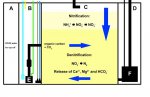
Many of you are wondering how DyMiCo, Dynamic Mineral Control works. At the bottom of our page, you can view the basic chemical processes that occur in the sand bed. But how does the system achieve this?
DyMiCo functions a bit like a sand bed or Jaubert system, but with several important innovations:
1. Seawater is actively drawn through the sand bed with a return pump. This means the system is not dependent on diffusion of nitrate and carbon into the sand bed. The amount of water filtered is controlled by the redox value measured inside the sand bed by an IKS Aquastar computer. The lower the redox value, the less oxygen is present in the sand bed, and the more water is filtered. The opposite is also true, where higher redox values trigger less pumping time. This results in a sinusoidal redox value, which fluctuates around an average value of about -200 mV. This value is ideal for denitrification.
2. The sand bed receives a carbon source every hour, which the bacteria use to break down nitrate. This also ensures that carbon does not have to diffuse through the sand bed, like in conventional denitrification systems. Again, this process is controlled by the computer. The lower the redox value, the less carbon is injected. Higer redox values trigger more carbon injection into the sand bed, to stimulate oxygen consumption by bacteria.
3. The sand bed also receives carbon dioxide (CO2) injection, based on the requirements of the user. A pH of 7 is sufficient in most cases to result in high calcium, magnesium and KH/alkalinity levels. DyMiCo works as a powerful calcium reactor, with a capacity of about 10% of the total system volume.
4. Finally, the carbon source and CO2 are actively and horizontally pumped through the sand bed, to ensure that the sand bed is evenly affected. This prevents black patches of sulphate reducing bacteria that produce toxic hydrogen sulfide gas (H2S), a common problem with conventional sand beds.
5. Because the entire aquarium water volume is filtered only once per 24 hours (on average), it removes less plankton and feeds from the water. This is why DyMiCo aquaria are richer in plankton (algae, bacteria and crustaceans) and filter feeders such as sponges, when compared to Berlin systems. The system also uses very little energy, and requires no water changes or Balling additives (calcium chloride, magnesium chloride or sodium bicarbonate).
The attached image shows the basic chemical processes that occur in the sand bed. The blue arrows represent vertical water flow when the return pump is active, and horizontal water flow when the process (or mixing) pump is active.
Bijlagen
Laatst bewerkt:
OP
OP
GlennF
Senior Forumlid
Glenn, wat is het doel van het kleine opvoerpompje in de overloop?

Omdat dymico alleen eens in de uur of zo water uit de sump haalt, heb je geen oppervlakte skimming.
Ik vind dat het wel mag , dus heb ik een lichte "in tank surface skimmer" gemaakt. Het pompje gebruikt amper 2 watt.
Het voordeel is dat de waterhoogte in de bak iets stabieler blijft en zich geen kaamlaag vormt, wat als voordeel heeft dat je toch extra oppervlakte uitwisseling van CO2 heb.
Daarnaast zorgt de waterval naar de overloopbox toe ook voor extra oppervlakte beweging/uitwisseling.
greetings, GlennF
OP
OP
GlennF
Senior Forumlid
Het is ook super intressant. Geen waterwissels meer etc. en minder werk. Hopend dat het ooit een bak kan worden zoals bij zoetwater met zelfde kwaliteit waar jullie nu mee bezig zijn. Bedoel dus zoutwaterbak zonder sump met zelfde techniek erin.
Jij doelt op een plug en play system. Wie weet ... alles is mogelijk .
Tot voor kort werd ook beweerd dat je geen koralen levend kan houden zonder waterwissels
Kijk nu eens hoeveel systemen er werken zonder wissels.. .
Het is een ecologisch verantwoorde manier van aquarium houden.
greetings, GlennF

anthony28
Commercie-vrij...
Omdat dymico alleen eens in de uur of zo water uit de sump haalt, heb je geen oppervlakte skimming.
Ik vind dat het wel mag , dus heb ik een lichte "in tank surface skimmer" gemaakt. Het pompje gebruikt amper 2 watt.
Het voordeel is dat de waterhoogte in de bak iets stabieler blijft en zich geen kaamlaag vormt, wat als voordeel heeft dat je toch extra oppervlakte uitwisseling van CO2 heb.
Daarnaast zorgt de waterval naar de overloopbox toe ook voor extra oppervlakte beweging/uitwisseling.
greetings, GlennF
Het idee is dat je tussen het doospoelen van het filter door, vast vuil in je overloop verzamreld. Ik snap de gedachte. Toch lijkt het me strijdig met het Dymico concept. Je "rooft" je op die manier juist het materiaal wat als voedsel voor je koraal kan dienen (om het vervolgens in het filter af te breken)? Wat je eigenlijk zou willen is toch een voedselrijke bak, maar wel met lage fosfaat en nitraatwaarden. Voedselrijk is niet het zelfde als hoge nitraat en fosfaatwaarden! Het is dan toch voldoende om uitsluitend de hoeveelheidwater te skimmen die nodig is om het filter voldoende verwerkingscapaciteit te geven (gestuurd op nitraat en fosfaat)
Laatst bewerkt:
OP
OP
GlennF
Senior Forumlid
Ik word er weer aan herinnerd waarom je beter met osmose water kan werken bij het aanmaken van nieuw zoutwater.
Vandaag een aantal metingen gedaan
Sal =29
Kh =6
Ca =480
Mg = 1185
Doordat ik water aanmaakt met leiding water kan je er niet van op aan dat de eindwaarden bekend zijn.
Mogelijk door neerslag reacties en het gelijktijdig aanwezige zandbodem bij de aanmaak is het iets afwijkend.
Geen ramp want we kunnen dit gewoon alsnog corrigeren met de DSR calculator.
KH reeds naar 8 gebracht. De andere parameters zal ik met de volgende meting corrigeren om de verloop vast te leggen.
greetings, GlennF
Install the app
How to install the app on iOS
Follow along with the video below to see how to install our site as a web app on your home screen.
Nota: This feature may not be available in some browsers.